Latest Posts

Showing posts with label Apophysis. Show all posts

Fractal created by Alida. She used APO.

    Carduus is a genus of flowering plants in the family Asteraceae, and the tribe Cardueae, one of two genera considered to be true thistles, the other being Cirsium. Plants of the genus are known commonly as plumeless thistles. They are native to Eurasia and Africa, and several are known elsewhere as introduced species. This genus is noted for its disproportionately high number of noxious weeds compared to other flowering plant genera.

These are usually annual or biennial herbs, sometimes perennial. Species often grow 2 meters in height but are known to reach 4 meters. The erect stems are winged and spiny, and usually have woolly hairs. The leaf blades are hairy to hairless and entire or divided into lobes, and they have spine-toothed edges. The flower heads are solitary or borne in inflorescences of up to 20. The head is spherical to cylindrical and covered in several layers of spreading or curving spine-tipped phyllaries. It contains long, tubular disc florets in shades of white, pink, or purple. The fruit is a cypsela tipped with a pappus of barbed bristles or scales.

Several Carduus are notorious invasive plants outside their native range, for example, in Australia and the United States. Species such as C. acanthoidesC. nutansC. pycnocephalus, and C. tenuiflorus easily become weedy in disturbed habitat, such as overgrazed pasture. C. nutans is allelopathic, producing compounds that inhibit the growth and development of other plants.


Agents of biological pest control that have been used against weedy Carduus thistles include the thistle head weevil (Rhinocyllus conicus), thistle crown weevil (Trichosirocalus horridus), and thistle crown fly (Cheilosia corydon). The musk thistle rust (Puccinia carduorum), a fungus, may also be used against C. nutans.


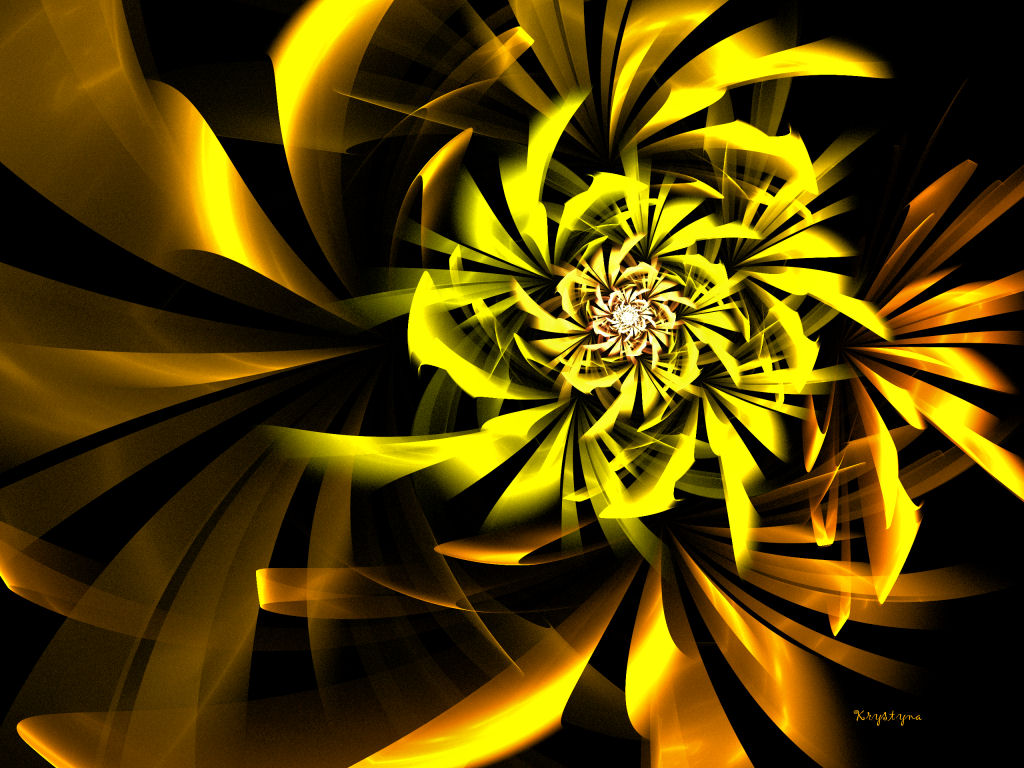
Fractal created by Krys. She used APO and this script.


// Created by Deborah Walker

// http://dwalker1047.deviantart.com/

// Deb's Rose Garden Script

// Requires wedge plugin


BG := 1;

If not InputQuery('Background Colour?', 'Black(1) or White(2)', BG) then Exit;

error := 1;


If BG = 1 then error := 0;

If BG = 2 then error := 0;


If not (error = 0) then ShowMessage('Background Colour must be 1 or 2. Defaulted to 1.');

If not (error = 0) then BG := 1;


RG := 1;

If not InputQuery('Random Gradient?', 'Yes(1) or No, use the current one(2)', RG) then Exit;

error := 1;            


If RG = 1 then error := 0;

If RG = 2 then error := 0;


If not (error = 0) then ShowMessage('Random Gradient must be 1 or 2. Defaulted to 1.');

If not (error = 0) then RG := 1;


    if RG = 1 then

      RandomFlame(0);

    Clear;


AddTransform

With Transform do

Begin

variation [0] := 0;

eyefish := 0.099;

bubble := 0.1;

pre_blur := 1;

julian := 0.007;

julian_power := 9;

julian_dist := 1.5;

wedge := 0.03;

wedge_angle := 1.5625;

wedge_hole := 0;

wedge_count := randomrange (3, 6);

wedge_swirl := 6;

transform.coefs[0,0] := -0.672338 //x0

transform.coefs[0,1] := 0.749244 //x1

transform.coefs[1,0] := -0.749244 //y0

transform.coefs[1,1] := -0.672338 //y1

transform.coefs[2,0] := -0.376992 //o0

transform.coefs[2,1] := -0.286956 //o1

color := random;

Weight := 0.5;

End


AddTransform

With Transform do

Begin

Transform.Variation[0] := 0;

spherical := -0.25;

swirl := 0.02;

bubble := 0.1;

pre_blur := 2;

wedge := 0.06;

wedge_angle := 2.5708;

wedge_hole := 0;

wedge_count := randomrange (3, 9);

wedge_swirl := 5;

transform.coefs[0,0] := -0.383024 //x0

transform.coefs[0,1] := -0.530396 //x1

transform.coefs[2,0] := 0.530396 //y0

transform.coefs[2,1] := -0.683024 //y1

transform.coefs[3,0] := 0.643977 //o0

transform.coefs[3,1] := 0.185739 //o1

color := random;

Weight := 0.05;

End;


AddTransform

With Transform do

Begin

Transform.Variation[0] := 0;

julia3D := 1 + random/15;

julia3D_power := -2;

transform.coefs[0,0] := 0.045931 //x0

transform.coefs[0,3] := -0.998945 //x1

transform.coefs[1,0] := 0.998945 //y0

transform.coefs[1,3] := 0.045931 //y1

transform.coefs[2,0] := 0.797277 //o0

transform.coefs[2,3] := -0.794721 //o1

color := random;

Weight := 0.5;

end;


AddTransform

With Transform do

Begin

Transform.Variation[0] := 0;

julia3D := 1 + random/30;

julia3D_power := 2;

transform.coefs[0,0] := 0.999542 //x0

transform.coefs[0,1] := -0.03026 //x1

transform.coefs[1,0] := 0.03026 //y0

transform.coefs[1,1] := 0.999542 //y1

transform.coefs[2,0] := -0.586717 //o0

transform.coefs[2,1] := 0.272914 //o1

color := random;

Weight := 0.5;

end;


AddTransform

With Transform do

Begin

Transform.Variation[0] := 0;

bubble := -0.061;

pre_blur := 3;

julia3D := 1 + random/45;

julia3D_power := 5;

ztranslate := 0.09;

transform.coefs[0,0] := 3.0 //x0

transform.coefs[0,1] := 0.0 //x1

transform.coefs[1,0] := -0.046679 //y0

transform.coefs[1,1] := 1.046679 //y1

transform.coefs[2,0] := -0.0 //o0

transform.coefs[2,1] := 0.0; //o1

color := random;

Weight := 0.1;

end;


AddTransform

With Transform do

Begin

Transform.Variation[0] := 01;

bubble := -0.041;

pre_blur := 2;

julia3D := 1 + random/75;

julia3D_power := 2;

ztranslate := 0.07;

transform.coefs[0,0] := 1.0 //x0

transform.coefs[0,1] := 0.0 //x1

transform.coefs[1,0] := -0.046679 //y0

transform.coefs[1,1] := 0.046679 //y1

transform.coefs[2,0] := -0.0 //o0

transform.coefs[2,1] := 0.0; //o1

color := random;

Weight := 0.1;

end;


Flame.gamma := 5;

Flame.brightness := 8;

Flame.x := 0;

Flame.y := 0.2;

Flame.pitch := (PI/180)*(RandomRange(100, 401)/10)

flame.yaw :=(PI/180)*(RandomRange(-3600, 3600)/10); //random 360 degrees

Flame.perspective := 0.15;

flame.scale := 20 + random/2;

//Set Transform Colours

For i := 0 to Transforms - 1 do

begin

   SetActiveTransform(i);

   Transform.Color := random;

end;


flame.gamma := 4

if BG = 1 then

  flame.brightness := 35

if BG = 2 then

  flame.brightness := 20

flame.x := 0;

flame.y := 0;

flame.scale := 9;


//Set Background Colour

if BG = 1 then

 Flame.Background[0] := 0;

if BG = 1 then

 Flame.Background[1] := 0;

if BG = 1 then

 Flame.Background[2] := 0;

if BG = 2 then

 Flame.Background[0] := 255;

if BG = 2 then

 Flame.Background[1] := 255;

if BG = 2 then

 Flame.Background[2] := 255;    



Peony. Fractal created by Lynn with Apophysis.

    The peony or paeony is a flowering plant in the genus Paeonia, the only genus in the family Paeoniaceae. Peonies are native to AsiaEurope and Western North America. Scientists differ on the number of species that can be distinguished, ranging from 25 to 40, although the current consensus is 33 known species. The relationships between the species need to be further clarified.

Most are herbaceous perennial plants 0.25–1 metre tall, but some are woody shrubs 0.25–3.5 metres tall. They have compound, deeply lobed leaves and large, often fragrant flowers, in colors ranging from purple and pink to red, white or yellow, in late spring and early summer. The flowers have a short blooming season, usually only 7–10 days.

Peonies are popular garden plants in temperate regions. Herbaceous peonies are also sold as cut flowers on a large scale, although generally only available in late spring and early summer.


Meaning  In the language of flowers, the peony carries the symbolic meaning of romance, compassion, good luck, prosperity, a happy marriage, and even bashfulness. In their native China, peonies are often referred to as the “queen of flowers” and are the official state flower of Indiana. 

https://www.petalrepublic.com/peonies-flowers/


Peony. Fractal created by Alida, She used Fractal Explorer


The first generation of Kao, wild peony, Ranunculaceae, and medicinal

genus, was founded in 1800 meters in Baiyun Mountain, Song County, Henan. Transplanted by Cui Yueqi, the owner of the house, in May 1958, after 27 years of labor and land, the plant chapter of "Henan Geography Knowledge Expo" was filmed by China Education Television in April 2017. The height of the tree is 1.7 meters, the diameter of the canopy is more than two meters, and the number of flowers will reach 350 in the future. The peony is among the longest-used flowers in Eastern culture. Along with the plum blossom, it is a traditional floral symbol of China, where the Paeonia suffruticosa is called (mǔdān). It is also known as "flower of riches and honour" or "king of the flowers", and is used symbolically in Chinese art.


    In 1903, the Qing dynasty declared the peony as the national flower. Currently, the Republic of China government in Taiwan designates the plum blossom as the national flower, while the People's Republic of China government has no legally designated national flower. In 1994, the peony was proposed as the national flower after a nationwide poll, but the National People's Congress failed to ratify the selection. In 2003, another selection process was initiated, but no choice has been made to date.

The ancient Chinese city Luoyang has a reputation as a cultivation centre for the peonies. Throughout Chinese history, peonies in Luoyang have been said to be the finest in the country. Dozens of peony exhibitions and shows are still held there annually.

In the Middle Ages, peonies were often painted with their ripe seed-capsules, since it was the seeds, not the flowers, which were medically significant. Ancient superstition dictated that great care be taken not to be seen by a woodpecker while picking the plant's fruit, or the bird might peck out one's eyes.

The red flowers of the species Paeonia peregrina are important in Serbian folklore. Known as Kosovo peonies (Serbianкосовски божурkosovski božur), they are said to represent the blood of Serbian warriors who died in the Battle of Kosovo.

In 1957, the Indiana General Assembly passed a law to make the peony the state flower of Indiana, a title which it holds to this day. It replaced the zinnia, which had been the state flower since 1931.[37]

Mischievous nymphs were said to hide in the petals of the Peony, giving it the meaning of Shame or Bashfulness in the Language of Flowers. While the peony takes several years to re-establish itself when moved, it blooms annually for decades once it has done so.

Peonies tend to attract ants to the flower buds. This is due to the nectar that forms on the outside of the flower buds, and is not required for the plants' own pollination or other growth. The presence of ants is thought to provide some deterrence to other harmful insects though, so the production of ant-attracting nectar is plausibly a functional adaptation. Ants do not harm the plants.

Peonies are a common subject in tattoos, often used along with koi-fish. The popular use of peonies in Japanese tattoo was inspired by the ukiyo-e artist Utagawa Kuniyoshi's illustrations of Suikoden, a classical Chinese novel. His paintings of warrior-heroes covered in pictorial tattoos included lions, tigers, dragons, koi fish, and peonies, among other symbols. The peony became a masculine motif, associated with a devil-may-care attitude and disregard for consequence.

Famous painters of peonies have included Conrad Gessner (ca. 1550) and Auguste Renoir in 1879. Paeonia officinalis can be found in the altar picture of Maria im Rosenhag by Schongauer in the former Dominican Church in Colmar.[34] The Italian Jesuit, painter and architect Giuseppe Castiglione (1688-1766), who worked at the court of the Qianlong Emperor in the Qing dynasty, painted peonies.


Fractal created by Krys, used Apophysis 7

{            BD's 3D Curled-Synth v2

  Written by Bart Doetsch 11/28/08


  As always: written for the users of Apophysis ; dedicated to the folks @

http://deviantart.com/ .


  No hassles , no copyrights , JUST DON'T SELL IT .


  This script ( & v1) were inspired by the "WovenFlower" flame by

obeyyourmaster. Check out her fantastic gellery @

http://obeyyourmaster.deviantart.com .


  Parameters for pitch & yaw courtesy of Bunny Clarke :

bunnyclarke.my-fractals.com


  Plugin required: Synth - available @ http://slobo777.deviantart.com/

art/Apo-Plugin-Synth-98877432 .

Anyone who can make 1 plugin that works as blur,bubble, &/or spherical is a

genius in my opinion.


  Plugin is also available @ http://fractal-resources.deviantart.com/


  TIPS: If your flame is too high or too low use the adjust tab . The 3D

version will not center itself by rotating a Transform . At times the flame

will " follow" T1 : raise T1 - flame goes up .


  T1- Move, rotate, resize - whatever looks good to you. Play with the

PostXform . Changing Fan2 variables produces different thicknesses of

"ribbons" or "petals". And there are enough variables in Synth to drive an

I.R.S. auditor insane ! Play with all of them.


  T2- Move slowly & be prepared for sudden & drastic changes . Change curl

variables to get tighter or less spiral effect. Flip it horizontally &

move it around to produce the "wreath" shape.


  Have Fun & Happy Holidays !!


  }


Clear;


AddTransform;

With Transform do

Begin

  a:= (0.4+(random*0.1));

  b:= (0.1+(random*0.1));

  c:= -(0.1+(random*0.1));

  d:= (0.15+(random*0.1));

  e:= (1+(random*(0.6-0.1)+0.1));

  f:= (random*(0.9-0.6)+0.6);


  Transform.Variation[0]:= 0;

  pre_blur:= 0.25;

  fan2:= (random*(0.7-0.2)+0.2);

   fan2_x:= -(0.1+(random*0.15));

   fan2_y:= -(random);

  synth:= (random*(1.9-0.8)+0.8);

   synth_a:= (1.25+(random*0.75));

   synth_power:= -2;

   synth_mode:= 1;

   synth_b:= (1+random);

   synth_b_type:= 3;

   synth_b_skew:= 0;

   synth_b_frq:= (random*(21-11)+11);

   synth_b_phs:= (1+random);

   synth_b_layer:= 2;


   synth_c:= random;

   synth_c_type:= 3;

   synth_c_skew:= 0;

   synth_c_frq:= (random*(11-5)+5);

   synth_c_phs:= (random*10);

   synth_c_layer:= 3;


  Weight:= (0.6+(random*0.1));

  Symmetry:= -1;

  Color:= random;

End;


AddTransform;

 With Transform do

 Begin

   a:= 0.308452;

   b:= 0.299884;

   c:= -0.291316;

   d:= 0.265612;

   e:= -0.344828;

   f:= -0.211576;


   Transform.Variation[0]:= 0;

   curl:= 1;

    curl_c1:= (0.8+(random*0.2));

    curl_c2:= 0;


  Weight:= 3.5;

  Symmetry:= 0.8;

  Color:= random;

End;


SetActiveTransform(0);

 With Transform do

 Begin

   Transform.post[0,0]:= -(0.3-(random*0.1));

   Transform.post[1,0]:= (0.4+(random*0.15));

   Transform.post[0,1]:= -(0.3+(random*0.15));

   Transform.post[1,1]:= -(0.4+(random*0.15));

   Transform.post[2,0]:= 0;

   Transform.post[2,1]:= 1;

End;


  // This section replaces the "CalculateColors" command.

For ccClr:= 0 to (Transforms-1) do

Begin

 SetActiveTransform(ccClr);

 Transform.Color:= (ccClr/(Transforms-1));

End;


Flame.FinalXformEnabled:= False;

Flame.x:= 0;

Flame.y:= 0;

Flame.pitch:= (PI/180)*(RandomRange(250,651)/10);

Flame.yaw:= (PI/180)*(RandomRange(-3600,3600)/10);

Flame.perspective:= 0.2;

Flame.Scale:= 150;

Flame.Gamma:= 2;

Flame.Brightness:= 7;

CalculateScale;

UpdateFlame:= True;

// END CODE


Fractal created by krys. She used Apo

{            BD's 3D Curled-Synth

  Written by Bart Doetsch 11/24/08


  As always : written for the users of Apophysis ; dedicated to the folks at

  http://deviantart.com/


  No hassles, no copyrights , JUST DON'T SELL IT.


  This script (& v2) were inspired by the " WovenFlower" flame by obeyyourmaster.

Check out her fantastic gallery @ http://obeyyourmaster,deviantart.com/


  Parameters for pitch & yaw courtesy of Bunny Clarke :

bunnyclarke.my-fractals.com


 Plugin required: Synth - available @ http://slobo777.deviantart.com/

art/Apo-Plugin-Synth-98877432

 Anyone who can make 1 plugin that works as blur,bubble &/or spherical is a

genius in my opinion.

 Plugin is also available @ http://fractal-resources.deviantart.com/


 TIPS: If your flame is too high or too low use the adjust tab :

3D version will not center itself by rotating a Transform , but at times the

flame will " follow " T1 ( raise T1 - flame goes up ).


 T1- Move , rotate, resize - whatever looks good to you. Play with the

PostXform . Changing Fan2 variable values produces different thicknesses of

"ribbons" or "petals". And there are enough variables in Synth to drive an

I.R.S. auditor insane ! Play with all of them .


 T2- Move slowly & be prepared for sudden & drastic changes. Change curl

variables to get tighter or less spiral effect. Flip it horizontally &

move it around to produce the "wreath" shape.


 Have Fun & Happy Holidays !!


  }


Clear;


AddTransform;

With Transform do

Begin


  r:= (random*(0.7-0.1)+0.1);        // Fan2 variable

  dn:= (random*(0.6-0.3)+0.3);      // T1 location


  a:= (-0.2+(random*0.1));

  b:= (0.1+(random*0.15));

  c:= -(0.7+(random*0.15));

  d:= -(0.3+(random*0.2));

  e:= (1.3-(random*0.15));

  f:= (0.4-(random*0.5));


  Transform.Variation[0]:= -0.125;

  pre_blur:= 0.25;

  fan2:= (random*(0.7-0.2)+0.2);

   fan2_x:= r;

   fan2_y:= 0;

  synth:= (random*(0.9-0.5)+0.5);

   synth_a:= (1.25+(random*0.75));

   synth_power:= -2;

   synth_mode:= 1;

   synth_b:= (1+random);

   synth_b_type:= 3;

   synth_b_skew:= 0;

   synth_b_frq:= (random*(21-11)+11);

   synth_b_phs:= (1+random);

   synth_b_layer:= 2;


   synth_c:= random;

   synth_c_type:= 3;

   synth_c_skew:= 0;

   synth_c_frq:= (random*(11-5)+5);

   synth_c_phs:= (random*10);

   synth_c_layer:= 3;


  Weight:= (0.6+(random*0.1));

  Symmetry:= -1;

  Color:= random;

If r>0.3 then                       // Added cylinder & changed location

  cylinder:= -0.25;

If r>0.3 then                // If fan2_x value too high ( that makes "ribbons" too wide )

  e:= (1-(random*0.1));

If r>0.3 then

  f:= dn;

End;


AddTransform;              // Set T2

 With Transform do

 Begin

   a:= 0.308452;

   b:= 0.299884;

   c:= -0.291316;

   d:= 0.265612;

   e:= -0.444828;

   f:= -0.211576;


   Transform.Variation[0]:= 0;

   curl:= 1;

    curl_c1:= (0.8+(random*0.2));

    curl_c2:= 0;


  Weight:= 3.5;

  Symmetry:= 0.95;

  Color:= random;

End;


SetActiveTransform(0);               // Set PostXform for T1

 With Transform do

 Begin

   Transform.post[0,0]:= -(0.4-(random*0.15));

   Transform.post[1,0]:= (0.4+(random*0.15));

   Transform.post[0,1]:= -(0.4+(random*0.175));

   Transform.post[1,1]:= -(0.4+(random*0.15));

   Transform.post[2,0]:= 0;

   Transform.post[2,1]:= 1;

End;


  // This section replaces the "CalculateColors" command.

For ccClr:= 0 to (Transforms-1) do

Begin

 SetActiveTransform(ccClr);

 Transform.Color:= (ccClr/(Transforms-1));

End;


Flame.FinalXformEnabled:= False;

Flame.x:= 0;

Flame.y:= 1;

Flame.pitch:= (PI/180)*(RandomRange(250,651)/10);

Flame.yaw:= (PI/180)*(RandomRange(-3600,3600)/10);

Flame.perspective:= 0.2;

Flame.Scale:= 150;

Flame.Gamma:= 2;

Flame.Brightness:= 7;

CalculateScale;

UpdateFlame:= True;

// END CODE


Cornflower. Fractal created by Lynn. Used Fractal Explorer.

    Centaurea cyanus, commonly known as cornflower or bachelor's button, is an annual flowering plant in the family Asteraceae native to Europe. In the past, it often grew as a weed in cornfields (in the broad sense of "corn", referring to grains, such as wheat, barley, rye, or oats), hence its name. It is now endangered in its native habitat by agricultural intensification, particularly by over-use of herbicides. However, Centaurea cyanus is now also naturalised in many other parts of the world, including North America and parts of Australia through introduction as an ornamental plant in gardens and as a seed contaminant in crop seeds.

Centaurea cyanus is an annual plant growing to 40–90 cm tall, with grey-green branched stems. The leaves are lanceolate and 1–4 cm long. The flowers are most commonly an intense blue colour and arranged in flowerheads (capitula) of 1.5–3 cm diameter, with a ring of a few large, spreading ray florets surrounding a central cluster of disc florets. The blue pigment is protocyanin, which in roses is red. Fruits are approx. 3.5 mm long with 2–3 mm long pappus bristles. It flowers all summer.


 Centaurea cyanus. Fractal created by Alida. Used Apo. 

    Centaurea cyanus is native to temperate Europe, but is widely naturalized outside its native range. It has been present in Britain and Ireland as an archaeophyte (ancient introduction) since the Iron Age.[ In the United Kingdom, it has declined from 264 sites to just 3 sites in the last 50 years. In reaction to this, the conservation charity Plantlife named it as one of 101 species it would actively work to bring 'back from the brink'.

In the County Clare (VC H9) in IrelandCentaurea cyanus is recorded in arable fields as very rare and almost extinct, while in the North-East of Ireland, it was abundant before the 1930s.


    Centaurea cyanus is considered a noxious weed in arable crops, especially cereals and rapeseed. In winter wheat, one plant per m2 can cause a yield loss of up to 30 kg / ha. Centaurea cyanus produces around 800 seed per plant, which are either shed shortly before the harvest of cereals, or they are threshed together with the cereal grains, contributing to the further spread of the species by the harvesting machinery and contaminated seed. The occurrence of Centaurea cyanus strongly decreased during the last decades due to improved seed cleaning, more intensive nitrogen fertilization and herbicide use. However, Centaurea cyanus has become more common in cropland due to an increase in crop rotations dominated by winter cereals and rapeseed and the use of more selective herbicides with a low effectiveness against Centaurea cyanus. In addition, the emergence of resistance against the herbicide class of sulfonylureas has been reported recently. Due to its strong roots, Centaurea cyanus is difficult to control mechanically in spring.

text below All About Cornflower (americanmeadows.com)

    Centaurea cyanus is a member of the Asteracea or Compositae family, which is a large and widespread group of plants that includes sunflowers, daisies, and asters. The genus is Centaurea, which includes both annual and perennial varieties. The following description focuses on C. cyanus, which is the annual flower, grown easily from seed and popular as a bedding plant or cut flower for home gardeners and florists.

Centaurea cyanus readily grow from seed and will thrive when sown indoors in pots 4 weeks before a frost-free date, then transplanted, or outdoors directly in the garden.

Centaurea cyanus is often used as a boutonniere in weddings, and because of their popularity, have been bred to produce plants for a wider range of blossom colors, including white, pink, red-purple, deep burgundy (sometimes called black) and the crisp blue which is the only true natural color.


Centaurea cyanus is called ‘Bluet’ in England and ‘Bluebonnet’ in Scotland, in North America they are sometimes called Ragged Robin, or Ragged Sailor because of the shaggy petals. They are one of the few true blue flowers that are also edible, imparting a sweet cucumber like taste. In the garden, they are visually stunning planted with brightly colored Nasturtiums, Marigold and California Poppies. In a vase, they blend well with Snapdragons, Sweet William and Love-in-a-Mist (or Nigella)


The Centaurea cyanus shape and brilliant blue color is similar to chicories, and has many associations throughout the world; it is the national flower of Estonia, representing the Estonian political party, and a symbol for social liberalism with the Swedish National Party. The blue cornflower also plays a role in German history, thanks to Queen Luis of Prussia who purportedly hid her children in a field of cornflowers. 


Centaurea cyanus blue was adopted for the uniforms of the Prussian army. In France, the cornflower is a common symbol for veterans of World War to wear, as a reminder of the 1918 Armistice, similar to the remembrance of poppies worn in the UK and Canada.


Wine
Fractal created by Krys
She used Apo7


 Vitis (grapevines) is a genus of 79 accepted species of vining plants in the flowering plant family Vitaceae. The genus is made up of species predominantly from the Northern hemisphere. It is economically important as the source of grapes, both for direct consumption of the fruit and for fermentation to produce wine. The study and cultivation of grapevines is called viticulture.

Most Vitis varieties are wind-pollinated with hermaphroditic flowers containing both male and female reproductive structures. These flowers are grouped in bunches called inflorescences. In many species, such as Vitis vinifera, each successfully pollinated flower becomes a grape berry with the inflorescence turning into a cluster of grapes. While the flowers of the grapevines are usually very small, the berries are often large and brightly colored with sweet flavors that attract birds and other animals to disperse the seeds contained within the berries.

Grapevines usually only produce fruit on shoots that came from buds that were developed during the previous growing season. In viticulture, this is one of the principles behind pruning the previous year's growth (or "One year old wood") that includes shoots that have turned hard and woody during the winter (after harvest in commercial viticulture). These vines will be pruned either into a cane which will support 8 to 15 buds or to a smaller spur which holds 2 to 3 buds.

Domestic cultivation

Grapevines are widely cultivated by gardeners, and numerous suppliers cater specifically for this trade. The plants are valued for their decorative foliage, often colouring brightly in autumn; their ability to clothe walls, pergolas and arches, thus providing shade; and their fruits, which may be eaten as dessert or provide the basis for homemade wines. 


MarkowaWinnica
more information 

Vine as a symbol
The grapevine (typically Vitis vinifera) has been used as a symbol since ancient times. In Greek mythologyDionysus (called Bacchus by the Romans) was god of the vintage and, therefore, a grapevine with bunches of the fruit are among his attributes. His attendants at the Bacchanalian festivals hence had the vine as an attribute, together with the thyrsus, the latter often entwined with vine branches. For the same reason, the Greek wine cup (cantharos) is commonly decorated with the vine and grapes, wine being drunk as a libation to the god.
In Christian iconography, the vine also frequently appears. It is mentioned several times in the New Testament. We have the parable of the kingdom of heaven likened to the father starting to engage laborers for his vineyard. The vine is used as symbol of Jesus Christ based on his own statement, “I am the true vine (John 15:1).” In that sense, a vine is placed as sole symbol on the tomb of Constantia, the sister of Constantine the Great, and elsewhere. 
In Byzantine art, the vine and grapes figure in early mosaics, and on the throne of Maximianus of Ravenna it is used as a decoration.
The vine as symbol of the chosen people is employed several times in the Old Testament. The vine and wheat ear have been frequently used as symbol of the blood and flesh of Christ, hence figuring as symbols (bread and wine) of the Eucharist and are found depicted on ostensories. Often the symbolic vine laden with grapes is found in ecclesiastical decorations with animals biting at the grapes. 
At times, the vine is used as symbol of temporal blessing.


 <flame name="FLOWERSforPLscrJULIA3dz" version="Apophysis 7x Version 14 (high-memory version)" size="1280 960" center="0.114476757045525 0.016137694321581" scale="499.2" angle="2.37347324978709" rotate="-135.99" oversample="1" filter="0.2" quality="1" background="0 0 0" brightness="4" gamma="2.5" gamma_threshold="0.04" estimator_radius="9" estimator_minimum="0" estimator_curve="0.4" enable_de="0">

   <xform weight="0.784460547729395" color="0" symmetry="0.82240329508204" spherical="0.862144728330895" coefs="1.202924 0.551316 0.418601 -1.202924 0.202145 -0.436422" opacity="1" />

   <xform weight="0.226315752754454" color="1" symmetry="-0.988742912118323" linear3D="0.411538425087929" radial_blur="0.3488" coefs="0.348635 0.160602 0.113584 0.251714 0.359568 -0.014805" radial_blur_angle="0.0343489" opacity="1" />

   <finalxform color="0.822578524239361" symmetry="0.936070012417622" julia3Dz="1" coefs="1.262601 -0.167546 0.167546 1.262601 -0.433084 0" julia3Dz_power="4" />

   <palette count="256" format="RGB">

      9D3510A360049E75049A8A04919F0788B50A84BD0B81C60C

      67D80953D50A40D20B31C60B23BA0C1BA90F1398130E8D14

      0A83160356160344170432180B3018132E191832161E3713

      2B4D082E5604325F01326400326A003069022E69042F660A

      2C5C13233C27242E3226213E331A4D40145C49136353136A

      710F7F7E0F868B0F8D901092961197941297921398891695

      7E16985D12994D118E3D1084330F7A290F70260F6A231065

      1B134A18164315193C131F3A1126390F2B380D3037073831

      03452D0D60281469251B73221C741D1D751820740F23720A

      2D6A1C2C61272C5832254E381E443E1B3F41193B44143749

      1235500F34520D344F0B354C0A3648093745083C3B0B4633

      1D652A2477232C891C2F901832981438A40F42AD124DB31A

      56B3225EA0305B8E33587C375676375470384D6336435C33

      2A5B272363231C6B20196F1F17731F197F1E248A1D31911F

      3E95225690265D8C26658827727D277A6E2682612183521E

      8035257D272F7A1A3978153C7710406E084560054C510355

      46075F2F1569281966221E6413245C082C5304374703463E

      13682E1F76272B8420308B1C3592193F9F1546A7124EA915

      53A81854991B53911B538A1C54781D57651D59501F613D20

      6E201E701B1B7317187114137013116D150C671B0C611F08

      572204482B004831004838004D4700535100545503515706

      43610D40640E3D6810376A142D6A1721671913621B085D21

      02562A01503301493C033D3E0C324219294C282151351A56

      42074B45044749024350043A580F325E1F2D5F31275A3F20

      51481A4A5315445C134264144066143C5F133D56163D491B

      3F3A223E2D29371D2A31132F2D0F362A0F3F29124D241655

      19195D0E1E63042468002B6E0032720035750337750A3771

      1338691E3A5D283A4F303C40383A353D382D42392B42372C

      3F3A313B3E39324243294C511D535B1359600D626008695B

      0775570C7F52168048207A3B2C6F2B35631C435A17585215

      6C46197E3D258B322C962735A3223EAD1B44B3194EB51754

      B41456B31155B10A4DAF0542AA0336A5072AA0111F9D2117

   </palette>

</flame>


Papaver rhoeas (common names include common poppy, corn poppy, corn rose, field poppy, Flanders poppy, or red poppy) is an annual herbaceous species of flowering plant in the poppy family, Papaveraceae. This poppy is notable as an agricultural weed (hence the common names including "corn" and "field") and after World War I as a symbol of dead soldiers. Before the advent of herbicides, P. rhoeas sometimes was abundant in agricultural fields. The corn poppy and its cultivars such as the Shirley poppy are widely grown in gardens.


  • Cultural usage 

Due to the extent of ground disturbance in warfare during World War I, corn poppies bloomed between the trench lines and no man's lands on the Western front. Poppies are a prominent feature of "In Flanders Fields" by Canadian Lieutenant Colonel John McCrae, one of the most frequently quoted English-language poems composed during the First World War. During the 20th century, the wearing of a poppy at and before Remembrance Day (sometimes known informally as Poppy Day) each year became an established custom in English-speaking western countries.[4] It is also used at some other dates in some countries, such as at appeals for Anzac Day in Australia and New Zealand.This poppy appears on a number of postage stamps, coins, banknotes, and national flags, includid:

Two hundred lei (Romanian banknote)

]Canadian twenty-dollar note (2012) and Canadian ten-dollar note (2001)The common or corn poppy was voted the county flower of Essex and Norfolk 

in 2002 following a poll by the wild plant conservation charity Plantlife

China 
In China, P. rhoeas iaccording to folklore, poppies grew out of the ground where Consort Yu fell, and P. rhoeas thus became a symbol of loyalty unto death.
In 2010 P. rhoeas was at the centre of a diplomatic row between China and the United Kingdom; during an official visit to China, the British Prime Minister David Cameron and his entourage rejected the demand from the Chinese government to not wear the Remembrance poppy, which was mistaken as the opium poppy, a plant with enduring connotations of the Opium Wars in China.